Cognitive & Neurological
What Is Oxytocin?
Sponsored
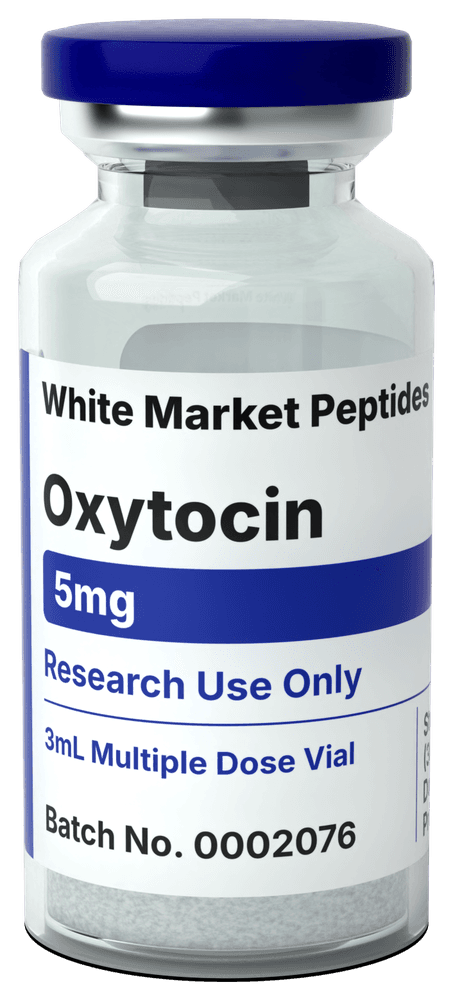
Oxytocin is a nine-amino-acid neuropeptide produced in the hypothalamus and released from the posterior pituitary. It is best known as the "bonding hormone" — a chemical signal involved in social trust, pair bonding, maternal behaviour, and anxiety reduction. But oxytocin is also a peptide with a long clinical history: FDA-approved as Pitocin for labour induction and postpartum haemorrhage control since the 1950s. More recently, intranasal and subcutaneous oxytocin have become active areas of psychiatric and neuroscience research, studied for applications ranging from autism spectrum disorder and PTSD to depression, wound healing, and pain modulation. This guide covers the biology, pharmacology, research evidence, and safety profile of oxytocin in the research context.
Note on context: Oxytocin is a well-established endogenous hormone and FDA-approved obstetric medication (IV/IM Pitocin for labour induction and postpartum haemorrhage). This article addresses the separate and distinct research use of intranasal and subcutaneous oxytocin for neurological and behavioural applications — a context in which it is not FDA-approved. The ISMP classification of IV oxytocin as one of the 12 most hazardous hospital medications applies specifically to the high-dose IV obstetric context, not to the low-dose intranasal or subcutaneous doses used in behavioural and psychiatric research.
The Short Answer
Oxytocin is a 9-amino-acid nonapeptide (Cys-Tyr-Ile-Gln-Asn-Cys-Pro-Leu-Gly-NH2) naturally synthesised in the paraventricular nucleus of the hypothalamus. It is released by the posterior pituitary and acts both peripherally (uterine contraction, milk ejection, cardiovascular tone) and centrally via oxytocin receptors distributed throughout the brain, producing effects on social behaviour, anxiety, bonding, and pain. In human research trials, intranasal oxytocin at 24 IU has been found to increase trust[3] and reduce anxiety, while its prosocial effects are characterised by a notable inverted-U dose–response curve and marked sex differences.[5] A large NIH-funded randomised trial (N=290) found no improvement in social functioning in children with autism spectrum disorder.[4]
Key Concepts
Structure and biochemistry:
Oxytocin is a cyclic nonapeptide with the sequence Cys–Tyr–Ile–Gln–Asn–Cys–Pro–Leu–Gly–NH2. A disulfide bridge between Cys1 and Cys6 creates the characteristic ring structure essential for receptor binding activity.
- Molecular weight: ≈1,007 Da
- Molecular formula: C43H66N12O12S2
- Disulfide bridge: Cys1–Cys6 (critical for bioactivity)
- C-terminal amidation: –Gly–NH2 (required for full receptor affinity)
- Potency standard: 1 mg = 600 IU (WHO International Standard); therefore 1 IU ≈ 1.67 mcg
Synthesis and release:
Oxytocin is synthesised by magnocellular neurosecretory cells in the paraventricular nucleus (PVN) and supraoptic nucleus (SON) of the hypothalamus. It is packaged into vesicles, transported along axons to the posterior pituitary, and released into the bloodstream. Separate populations of oxytocinergic neurons in the PVN project directly to limbic and brainstem structures, mediating central behavioural effects independently of peripheral release.[1]
Receptor:
Oxytocin acts on the oxytocin receptor (OXTR), a G-protein coupled receptor (Gq/11-coupled) found in the uterus, breast, kidneys, heart, and throughout the central nervous system — including the amygdala, nucleus accumbens, prefrontal cortex, hippocampus, and hypothalamus. OXTR also has moderate affinity for the closely related vasopressin V1a and V1b receptors, producing some functional cross-talk at higher concentrations.
Research Evidence
Bottom line: Oxytocin has robust evidence for acute prosocial and anxiolytic effects in healthy adults administered intranasal oxytocin. Evidence for therapeutic efficacy in clinical populations is mixed, and the large-scale ASD trial was negative.
| Application | Key Finding | Evidence Quality |
|---|---|---|
| Social trust (healthy adults) | Single dose 24 IU intranasal increased trust in economic game paradigms[3] | Moderate — multiple replications; effect size varies; some failures to replicate |
| Anxiety reduction | Intranasal 24 IU reduces anxiety on validated scales in multiple trials[2] | Moderate — consistent direction; dose-response complexity noted |
| Social bonding & prosocial behaviour | Systematic review found broadly prosocial effects across 38 studies[2] | Moderate — largely healthy adult samples; context-dependency documented |
| Autism spectrum disorder (ASD) | Large NIH RCT (N=290 children/adolescents, 24 weeks): no improvement in social functioning vs placebo[4] | High — adequately powered RCT; results were definitively negative |
| PTSD and trauma | Some studies show reduced amygdala reactivity to threat cues; reduced fear responses; not yet validated in RCTs[1] | Low — preliminary; no large clinical trials completed |
| Depression | Interaction with serotonin system documented; preclinical antidepressant-like effects; limited human data[1] | Low — preclinical and mechanistic data only |
| Pain modulation | Antinociceptive and anti-inflammatory effects via spinal and supraspinal pathways[6] | Moderate (animal) / Low (human) — robust animal data; limited human RCTs |
| Wound healing & inflammation | OXTR expressed on immune cells; reduced pro-inflammatory cytokines; accelerated wound closure in animals[6] | Low (human) — preclinical data encouraging; no human wound trials |
| Metabolic effects | Reduced food intake and adiposity in animal models; early-phase human data[1] | Low — primarily rodent data; human trials ongoing |
How Oxytocin Works
Oxytocin exerts its social and behavioural effects primarily through central oxytocinergic projections from the PVN to the limbic system. Key mechanisms include:
Amygdala modulation: OXTR activation in the basolateral and central amygdala reduces activity of fear and threat-processing circuits, dampening the stress response to social stimuli. This is thought to underlie both the anxiolytic and prosocial effects of intranasal oxytocin.[1]
Reward circuit engagement: Oxytocin acts on the nucleus accumbens and ventral tegmental area to potentiate dopaminergic reward signals associated with social interaction — providing a neurochemical basis for the reinforcement of social bonding.[1]
HPA axis suppression: Oxytocin attenuates corticotropin-releasing factor (CRF) release, blunting cortisol responses to stress. This anti-stress axis is one mechanism underlying the anxiolytic effects documented in human trials.[6]
Serotonin interaction: Oxytocin neurons co-release serotonin precursors and interact with 5-HT1A receptors in limbic regions, linking the oxytocinergic system to mood regulation.[1]
Anti-inflammatory pathway: Peripheral OXTR on immune cells (macrophages, T-cells) mediates suppression of NF-κB signalling and reduction in TNF-α, IL-6, and IL-1β production.[6]
Important caveat — context-dependency: Oxytocin does not uniformly promote prosocial behaviour. The "social salience" hypothesis proposes that oxytocin amplifies the salience of social information, whether positive or negative. In some contexts or individuals, oxytocin may increase in-group favouritism, envy, or threat-related behaviour. This context-dependency is particularly important when interpreting research results from different populations and paradigms.[5]
Routes of Administration
The route of administration is the most important variable in oxytocin research and one of the most actively debated topics in the field.
Intranasal (IN) — the primary research route for CNS effects:
Intranasal oxytocin is the dominant route used in human behavioural and psychiatric research. The nasal mucosa provides proximity to the olfactory and trigeminal pathways that bypass the blood-brain barrier. Published human research doses range from 20–40 IU, with 24 IU being the most widely used. Onset of central effects is typically within minutes; duration of behavioural effects is approximately 20 minutes centrally. Key considerations:
- Requires a purpose-formulated intranasal spray — a lyophilised research vial dissolved in sterile saline for intranasal use is not equivalent to a pharmaceutical nasal spray device
- The extent to which nasally administered oxytocin actually reaches the brain vs. acting via peripheral nasal mucosal OXTR is actively debated in the literature[5]
- 1 IU ≈ 1.67 mcg; therefore 24 IU ≈ 40 mcg
Subcutaneous (SC) injection:
SC injection is the common route used in research peptide protocols and has been studied for both peripheral effects (wound healing, anti-inflammatory, metabolic) and behavioural effects. SC administration avoids nasal mucosal variability but does not achieve the same presumed direct CNS delivery as the intranasal route. Peripheral plasma half-life is short (≈1–2 minutes IV; longer SC due to absorption kinetics).[6]
Intravenous (IV) and intramuscular (IM):
Reserved for the clinical obstetric context (Pitocin). Not used in behavioural research due to rapid peripheral degradation and haemodynamic effects at clinical doses. The ISMP hazardous medication classification for oxytocin applies specifically to IV use in the obstetric context — not to intranasal or SC research doses.
Safety Profile
At research doses (18–40 IU intranasal), the published safety profile of oxytocin is described as "placebo-like" in controlled trials. The large Sikich et al. (2021) NIH-funded RCT in 290 children and adolescents with ASD over 24 weeks found no significant difference in adverse event rates between oxytocin (24 IU twice daily) and placebo, including no cardiovascular, endocrine, or behavioural safety signals.[4]
Known or potential adverse effects:
- Intranasal: Nasal irritation, headache, mild nausea at higher doses; generally transient and mild
- Subcutaneous injection: Injection site reactions (redness, mild pain); nausea possible at higher SC doses
- Behavioural: Context-dependent effects — in some individuals or contexts oxytocin may increase anxiety or negative social perception rather than reducing it; the inverted-U dose–response means that higher doses may paradoxically worsen outcomes[5]
- Antidiuretic effect: Oxytocin shares structural similarity with vasopressin and has mild antidiuretic activity; this is clinically relevant at high IV doses but negligible at intranasal or low SC doses
Drug interactions and contraindications:
- Vasoconstrictors: Coadministration with vasoconstrictors (sympathomimetics) can produce severe hypertension
- QT-prolonging drugs: High-dose oxytocin is associated with QT prolongation in the obstetric context; not established at research doses
- Cyclopropane anaesthesia: Contraindicated in obstetric IV use due to hypotensive interactions; not relevant to research doses
- Pregnancy: Endogenous oxytocin drives labour; exogenous oxytocin at any dose during pregnancy is contraindicated outside the medically supervised obstetric context
Important regulatory note: Oxytocin is not FDA-approved for intranasal or subcutaneous use. FDA-approved forms (Pitocin) are IV/IM formulations for obstetric use only. Research use of oxytocin in vial form is separate from the approved indication and is subject to applicable research regulations.
Dosage Reference
Important: The following is for educational reference only. All doses are extrapolated from published research literature. Oxytocin is not approved for intranasal or subcutaneous therapeutic use.
Published intranasal research doses (human trials):
- Range used in published trials: 20–40 IU (33–67 mcg), typically as a single dose administered 45–90 minutes before assessments
- Most common dose: 24 IU (≈40 mcg) — used in the majority of trust, anxiety, and prosocial studies[3]
- ASD chronic dosing (Sikich 2021): 24 IU twice daily for 24 weeks — primary outcome was negative[4]
- Conversion: 1 IU = 1.67 mcg (WHO standard: 600 IU/mg); therefore 24 IU = 40 mcg
Subcutaneous dosing (research protocols): See the Oxytocin 5 mg Dosage Protocol for full reconstitution instructions, syringe units table, and titration schedule.
Key pharmacokinetic note: Oxytocin exhibits an inverted-U dose–response relationship for prosocial effects — doses above the optimal range may produce diminished, null, or paradoxically negative outcomes. More is not better. This has been consistently observed across multiple behavioural paradigms and is attributed to receptor desensitisation and context-modulating effects at higher occupancy.[5]
FAQ
Is oxytocin the same as the "love hormone"?
Partially. Oxytocin earned the "love hormone" label because it is released during positive social interactions — physical touch, eye contact, orgasm, breastfeeding — and plays a genuine role in social bonding, maternal behaviour, and pair bonding. But the label is an oversimplification. Oxytocin does not universally promote positive social feelings. Research has shown that it can amplify in-group favouritism while increasing distrust of out-group members, heighten envy, and in some individuals increase anxiety. A more accurate characterisation is that oxytocin is a "social salience" molecule that amplifies the significance of social information — which can cut both ways depending on context.[5]
What is the difference between intranasal and injectable oxytocin for research?
Intranasal oxytocin is the predominant route in human CNS and behavioural research. The rationale is that the nasal route provides proximity to olfactory and trigeminal nerve pathways that may allow direct CNS delivery, bypassing rapid peripheral degradation. However, what fraction of intranasal oxytocin actually reaches the brain (vs. acting on peripheral nasal mucosal receptors) remains contested. Subcutaneous injection is the standard route in research peptide protocols and is better suited for studying peripheral effects (anti-inflammatory, wound healing, metabolic) as well as some behavioural effects. Both routes avoid the haemodynamic and safety risks associated with high-dose IV Pitocin in the obstetric context.
Does intranasal oxytocin actually improve trust and social bonding?
Yes, in controlled human research — with important caveats. The most replicated finding is that 24 IU intranasal oxytocin increases trust in economic game paradigms (e.g., the Trust Game) and reduces behavioural markers of social anxiety.[3] A systematic review of 38 studies found broadly prosocial effects in healthy adults.[2] However, effect sizes are modest, several studies have failed to replicate, and effects are highly context-dependent and sexually differentiated. The field has had to revise early enthusiasm in light of replication challenges and the complexity of the dose–response relationship.[5]
Does oxytocin help with autism?
Current evidence says no for the primary outcome of social functioning. The most rigorous test to date — the Sikich et al. (2021) NIH-funded multisite RCT involving 290 children and adolescents with ASD treated with 24 IU intranasal oxytocin twice daily for 24 weeks — found no significant improvement in social functioning compared with placebo on the primary outcome measure.[4] This was a well-powered, methodologically rigorous trial that effectively closed the door on oxytocin as a straightforward treatment for core ASD social deficits in this population. Research continues into whether specific subtypes, ages, or genetic variants (e.g., OXTR polymorphisms) might identify responders, but no treatment recommendation is currently supported by the evidence.
What is the correct research dose of oxytocin?
For intranasal research in adults, the most commonly used dose in published trials is 24 IU (≈40 mcg), typically administered 45–90 minutes before behavioural assessments. The studied range is 20–40 IU. Because of the inverted-U dose–response curve, exceeding the optimal dose may produce no additional benefit or may impair outcomes. Conversion: 1 mg = 600 IU (WHO standard), so 1 IU ≈ 1.67 mcg. For subcutaneous research protocols, see the Oxytocin 5 mg Dosage Protocol.
Is oxytocin safe?
At the doses used in human research (18–40 IU intranasal or equivalent SC doses), oxytocin has a well-documented, favourable short-term safety profile. The 24-week NIH RCT in children with ASD — the longest and largest controlled trial of chronic intranasal oxytocin — found no significant difference in adverse events vs. placebo.[4] The "most hazardous hospital medication" classification applies specifically to IV Pitocin in the obstetric context, where doses and haemodynamic effects are orders of magnitude different. Long-term safety data for chronic intranasal or SC use in healthy adults are limited. The inverted-U dose–response means higher doses are not safer and may be less effective. Individuals with vasopressor-sensitive conditions or on QT-prolonging medications should exercise particular caution.
Next Steps
For reconstitution instructions, syringe unit tables, and a titration schedule, see the Oxytocin 5 mg Dosage Protocol. For other neuropeptides studied for anxiolytic and behavioral effects, see the Selank and DSIP articles.
Related on pep-dose
Sources
- Lee HJ et al. — Progress in Neurobiology (2009)
- MacDonald K & MacDonald TM — Harvard Review of Psychiatry (2010)
- Nave G et al. — Psychological Science (2015)
- Sikich L et al. — New England Journal of Medicine (2021)
- Guastella AJ & MacLeod C — Hormones and Behavior (2012)
- Uvnäs-Moberg K et al. — Acta Physiologica (2014)