Single-peptide protocol
Retatrutide (10mg Vial) Dosage Protocol
Retatrutide 10mg vial dosage protocol. Reconstitution, dose escalation, syringe units, and triple agonist dosing guide.
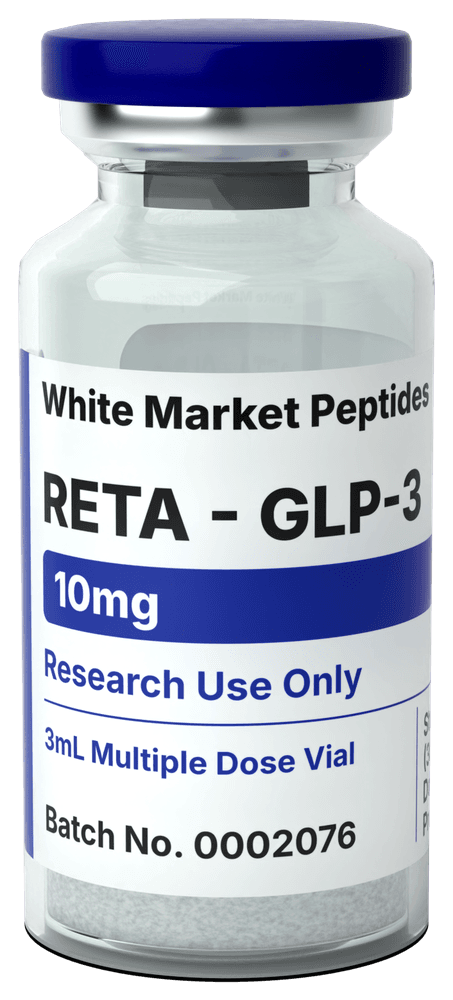
- Peptide
- retatrutide
- Vial
- 10 mg
- Water
- 1 mL
- Concentration
- 10.00 mg/mL
Sponsored
Contents
At a Glance
Retatrutide is a novel triple agonist targeting GLP-1, GIP, and glucagon receptors[1], studied for substantial weight loss and metabolic improvement in obesity and type 2 diabetes[2][3]. With an extended half-life of approximately 6 days, this peptide enables convenient once-weekly subcutaneous dosing with a gradual titration protocol to optimize tolerability[1][4].
- Reconstitute: Add 1.0 mL bacteriostatic water → 10.0 mg/mL concentration for convenient weekly doses.
- Typical weekly range: 2–8 mg once weekly (gradual escalation over 13+ weeks).
- Easy measuring: At 10.0 mg/mL, 1 unit = 0.01 mL ≈ 100 mcg on a U-100 insulin syringe.
- Storage: Lyophilized: freeze at −20 °C (−4 °F); after reconstitution, refrigerate at 2–8 °C (35.6–46.4 °F) and use within 2–4 weeks.
Overview
Concise summary of the once-weekly regimen based on clinical trial protocols.
- Goal: Achieve substantial weight loss (up to 24% of body weight) and improved metabolic parameters through triple receptor agonism[2][5].
- Schedule: Weekly subcutaneous injections for 12+ weeks with gradual dose escalation.
- Dose Range: 2–8 mg once weekly; escalating gradually over 13+ weeks[1][3].
- Reconstitution: 1.0 mL per 10 mg vial (10.0 mg/mL) provides high concentration for convenient weekly dosing.
- Storage: Lyophilized frozen at −20 °C (−4 °F); reconstituted solution refrigerated at 2–8 °C (35.6–46.4 °F); use within 2–4 weeks.
What You’ll Need
Plan based on a 12–48 week weekly protocol with gradual titration to maintenance dose.
-
Peptide Vials (Retatrutide, 10 mg each): Requirements increase with dose escalation
- 12 weeks (2→4→8 mg titration): ~6 vials
- 24 weeks (up to 8 mg): ~13 vials
- 48 weeks (maintenance at 8 mg): ~36 vials
-
Insulin Syringes (U-100, 1 mL):
- Per week: 1 syringe (once-weekly dosing)
- 12 weeks: 12 syringes
- 24 weeks: 24 syringes
- 48 weeks: 48 syringes
-
Bacteriostatic Water (10 mL bottles): Use 1.0 mL per vial for reconstitution.
- 13 weeks (6 vials): 6 mL → 1 × 10 mL bottle
- 24 weeks (13 vials): 13 mL → 2 × 10 mL bottles
- 48 weeks (36 vials): 36 mL → 4 × 10 mL bottles
-
Alcohol Swabs: One for the vial stopper + one for the injection site each week.
- Per week: 2 swabs
- 12 weeks: 24 swabs → 1 × 100-count box
- 24 weeks: 48 swabs → 1 × 100-count box
- 48 weeks: 96 swabs → 1 × 100-count box
How to Reconstitute
- Draw 1.0 mL bacteriostatic water with a sterile syringe.
- Inject slowly down the vial wall; avoid foaming.
- Gently swirl/roll until dissolved (do not shake vigorously).
- Label with reconstitution date and refrigerate at 2–8 °C (35.6–46.4 °F), protected from light.
Dosing Schedule
| Week(s) | Weekly Dose (mcg) (mg) | Units (per injection) (mL) |
|---|---|---|
| Weeks 1–4 | 2,000 mcg (2 mg) | 20 units (0.20 mL) |
| Weeks 5–8 | 4,000 mcg (4 mg) | 40 units (0.40 mL) |
| Weeks 9–12 | 6,000 mcg (6 mg) | 60 units (0.60 mL) |
| Weeks 13+ | 8,000 mcg (8 mg) | 80 units (0.80 mL) |
Frequency: Inject once weekly subcutaneously. This schedule follows clinical trial protocols that demonstrated significant weight loss[2] while minimizing gastrointestinal adverse events through gradual escalation[1][4]. Starting at 2 mg weekly significantly reduces initial GI side effects. At 10.0 mg/mL, all doses from 2–8 mg fit comfortably within a single 1 mL syringe.
Protocol Details
Evidence-based weekly titration approach from clinical trials.
- Start: 2 mg once weekly for first 4 weeks to establish tolerability[1][4].
- Escalation: Increase to 4 mg weekly (Weeks 5–8), then 6 mg weekly (Weeks 9–12)[1].
- Maintenance: 8 mg weekly (Week 13 onward) as the target maintenance dose[2].
- Frequency: Once per week (subcutaneous); consistent day/time recommended.
- Cycle Length: Minimum 12 weeks for titration; clinical trials extended to 48 weeks showing sustained weight loss[2].
- Timing: Any consistent weekly schedule; rotate injection sites each week.
Storage
Proper storage maintains peptide stability and potency.
- Lyophilized: Store at −20 °C (−4 °F) or colder for long-term preservation; protect from moisture and light[11][12].
- Reconstituted: Refrigerate at 2–8 °C (35.6–46.4 °F) immediately after mixing; use within 2–4 weeks for maximum potency[11].
- Handling: Allow frozen vials to reach room temperature before opening to minimize condensation; never expose reconstituted solution to heat or direct sunlight.
- Aliquoting: For extended storage beyond 4 weeks, consider freezing unused aliquots; avoid repeated freeze-thaw cycles[12].
How Retatrutide Works
Retatrutide is a first-in-class triple agonist that simultaneously activates three key metabolic hormone receptors: GLP-1 (glucagon-like peptide-1), GIP (glucose-dependent insulinotropic polypeptide), and glucagon[1][5]. This triple mechanism produces synergistic effects on appetite suppression, energy expenditure, and glucose metabolism that exceed single or dual agonists.
The GLP-1 component reduces appetite and slows gastric emptying; GIP enhances insulin secretion and may support fat metabolism; glucagon receptor activation increases energy expenditure and promotes fat oxidation[5][8]. With an extended half-life of approximately 6 days, retatrutide enables convenient once-weekly dosing while maintaining therapeutic levels[1].
In clinical trials, participants receiving 12 mg weekly retatrutide lost an average of 24% of their body weight over 48 weeks[2]. In adults with type 2 diabetes, retatrutide (up to 12 mg weekly) achieved approximately 17% weight loss at 36 weeks alongside HbA1c reductions of approximately 2.0% compared to placebo[3]. A 2025 meta-analysis of three trials (878 participants) confirmed retatrutide achieved significantly greater weight reduction than placebo (mean difference approximately 14% of body weight) with no significant increase in overall adverse events[6][7].
Good to Know
- Weekly consistency: Choose a specific day/time for your weekly injection and maintain this schedule throughout the protocol.
- Gradual titration is essential: Starting at 2 mg weekly (versus higher doses) significantly reduces initial gastrointestinal side effects[4].
- Use new sterile insulin syringes for each injection; dispose immediately in a puncture-proof sharps container[14].
- Rotate injection sites weekly (abdomen, thighs, upper arms) at least 1 inch apart to prevent local irritation or lipohypertrophy[15].
- For doses exceeding 1.0 mL, either reconstitute multiple vials or split the dose into separate injections at different sites.
- Monitor for gastrointestinal side effects (nausea, diarrhea); if severe, consider extending the time at current dose before escalating.
- Substantial weight loss: Up to 24% reduction in body weight at 48 weeks with 12 mg weekly dosing[2].
- Glycemic improvement: Significant HbA1c reductions (approximately 2.0%) in adults with type 2 diabetes[3].
- Metabolic benefits: Improvements in lipid profiles, blood pressure, and cardiovascular risk markers[1][5].
- Convenient dosing: Once-weekly subcutaneous administration improves adherence compared to daily regimens[1].
- Gastrointestinal effects: Nausea, diarrhea, vomiting, and constipation are the most common adverse events; typically mild-to-moderate and diminish over time[2][4].
- Starting at 2 mg weekly (versus 4 mg) significantly reduces initial GI adverse events[4].
- Injection site reactions: Mild redness, swelling, or discomfort at injection sites may occur; rotate sites to minimize.
- Overall safety profile: Meta-analysis found no significant increase in overall adverse events compared to placebo[6][7].
- For background on Retatrutide's mechanism, evidence, and safety profile, see What Is Retatrutide?.
Tips for Best Results
Complementary strategies to optimize outcomes during retatrutide protocols.
- Nutrition: Adopt a balanced, protein-forward diet (1.0–1.2 g/kg body weight) to preserve lean mass during weight loss[10].
- Hydration: Maintain adequate fluid intake, especially during dose titration when GI effects are most common.
- Physical activity: Combine resistance training (2–3×/week) with moderate aerobic exercise to support metabolic adaptations and preserve muscle mass.
- Sleep & stress: Prioritize 7–9 hours of quality sleep and implement stress management techniques to support hormonal balance and adherence.
- Meal timing: Some individuals find smaller, more frequent meals help manage GI side effects during initial titration.
Injection Tips
- Clean the vial stopper and injection site with separate alcohol swabs; allow both to air-dry fully before proceeding.
- Using a 29–31 gauge insulin syringe (5/16″ to 1/2″ needle), draw the calculated dose precisely.
- Pinch a fold of skin and insert the needle at 45° into subcutaneous fat (90° is acceptable with a short needle into a well-pinched fold).
- Inject slowly over 2–3 seconds; do not aspirate. Withdraw the needle, apply gentle pressure, and do not rub the site.
- Rotate injection sites (abdomen, thighs, upper arms) and dispose of each syringe in a sharps container immediately after use.
Related on pep-dose
- Article
What is Retatrutide?
What is Retatrutide? Triple-receptor agonist (GLP-1/GIP/Glucagon) for weight loss. Mechanism, clinical trial data, and dosing guidance.
- Protocol
Retatrutide (30mg Vial) Dosage Protocol
Retatrutide 30mg vial dosage protocol. Reconstitution, weekly injection schedule, syringe measurements, and dosing guide.
- Protocol
Retatrutide (5mg Vial) Dosage Protocol
Retatrutide 5mg vial dosage protocol. Reconstitution, weekly dosing schedule, syringe measurements, and titration guide.
Sources
- New England Journal of Medicine (2023)
- JAMA Network (2023)
- The Lancet (2023)
- PubMed / NEJM (2023)
- Metabolites (PMC, 2025)
- Baylor University Medical Center Proceedings (PMC, 2025)
- PubMed (2025)
- Molecular Metabolism (2025)
- Nature Reviews Endocrinology (2024)
- Journal of Cachexia, Sarcopenia and Muscle (PMC)
- GenScript
- Bachem
- Centers for Disease Control and Prevention (CDC)
- NCBI Bookshelf
- Pharmacologic Considerations of the Subcutaneous Route (PMC)